UPF Upper Austria, in collaboration with the
Holzknecht Museum in Reichraming, hosted a moving
film afternoon at the Peace Bridge
Seventeen years ago, Bogdan Pammer and some friends
from Austria invited young adults from Israel and Palestine to spend a week in
Upper Austria to get to know one another and create a joint peace project. With
financial support from the state of Upper Austria, several companies, and
especially the mayor of Reichraming and a local carpentry,
they were able to work together to build a substantial peace bridge. Each evening, a different group presented its
culture, but unfortunately, they couldn't do so without getting into political
arguments. However, the next day, as they sawed, sanded, and hammered together,
they worked side by side again and were able to forget the traumatic
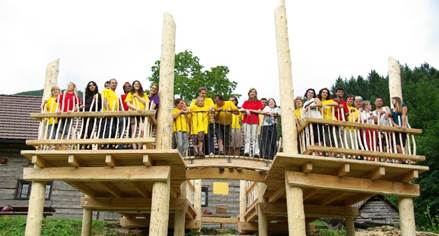
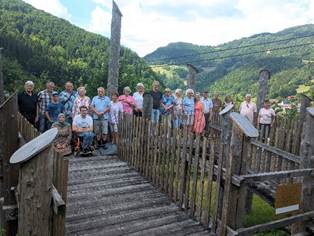
experiences they had endured back home. The bridge consists of two platforms
that diverge, symbolizing Israel and Palestine, and a metal bridge connecting
these platforms as a symbol of hope.
Since then, the Peace Bridge has been used for many
events, such as readings by a Holocaust survivor, Peace Roads, weddings, etc.,
and has been repaired time and again. The sustainability of this project is
also evident in the fact that, even after 17 years, contacts with the
participants from that time still exist.
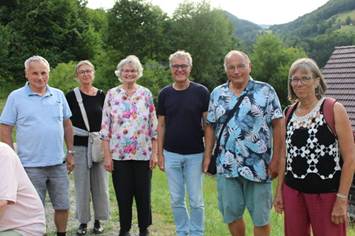
On July 5, 2026, UPF Upper Austria and the Holzknecht Museum hosted a movie afternoon. While
waiting for all the nearly 30 guests to arrive, attendees enjoyed coffee and
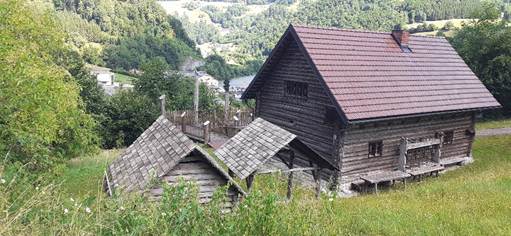
cake and had the opportunity to tour the Holzknecht Museum, in front of which
the Peace Bridge was built.
Ms. Pammer then explained how the Peace Bridge came to
be, and since pictures often speak louder than words, we showed a short film
about the bridge’s creation, which inspired everyone. After taking a group
photo on the Peace Bridge, the former mayor presented Ms. Pammer a 28-page essay
containing his reflections on the peace project from that time, subtitled
“Everything in the world depends on a clever idea and a firm resolve” (Johann
Wolfgang von Goethe).
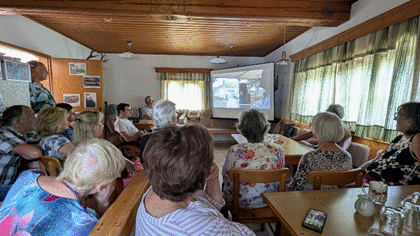

The main event of the movie afternoon was the film
“Birgitta’s Friends” by filmmaker Christian Kogler (in English with German
subtitles). https://crossingeurope.at/film/birgittas_friends
Director Christian Kogler introduced the 70-minute film,
which portrays the lives of a Holocaust survivor and a member of the
Palestinian resistance with great emotional depth and without judgment. The
statements made by the interviewees of Birgitta—an Austrian woman who lived and
worked in Israel for many years—gave us all much food for thought. How can
reconciliation and lasting peace be achieved?
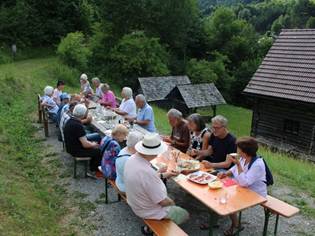
After the film, we had the opportunity to chat with
filmmaker Christian Kogler and the film’s protagonist, Birgitta, over a farm-style
snack in this beautiful natural setting.
That afternoon made us feel sad, but it also gave us
hope that there are many people who care about the fate of others and who use
their respective skills to contribute to a better society.
(Maria
Pammer, UPF Upper Austria)